Government decree threatens independence of Spanish public service broadcaster
The Media Freedom Rapid Response (MFRR) consortium expresses concern over Spain’s recent decree lowering the majority required to appoint RTVE board members, risking increased political control. We urge the Parliament of Spain to protect RTVE’s independence and ensure a transparent selection.
On 22 October 2024, the Spanish government enacted a decree law that reduces the parliamentary majority requirement for renew the appointment of board members of RTVE, the national public service broadcasters (namely TVE or Televisión Española, and RNE or Radio Nacional de España), from a two-thirds majority to a simple absolute majority.
This amendment to Law 17/2006 on Public Broadcasting also expands the number of RTVE board members from 10 to 15 (of which 11 would be chosen by Parliament, 4 by the Senate) and strengthens powers granted to the board’s president.
We recall that the State’s obligation to promote media freedom and pluralism, including through the media, does not permit it to interfere with broadcasters’ freedom of expression, including publicly-funded media. An important implication of these guarantees is that bodies which exercise regulatory or other powers over broadcasters must be independent. This principle has been explicitly endorsed in a number of international and regional instruments, including the new European Media Freedom Act which requires the EU member states to ensure the independent functioning of public service media.
We urge the Spanish government to prioritize media independence by adhering to transparent, merit-based board appointments. To limit political influence on Spain’s public service broadcaster, we call on the Parliament of Spain to reject the decree law as it is, and preserve the two-thirds majority requirement. Our consortium will keep advocating for measures that guarantee RTVE’s autonomy, and respect international media freedom standards.
Signed by:
International Press Institute (IPI)
ARTICLE 19
European Centre for Press and Media Freedom (ECPMF)
European Federation of Journalists (EFJ)
Free Press Unlimited (FPU)
This statement was coordinated by the Media Freedom Rapid Response (MFRR), a Europe-wide mechanism which tracks, monitors and responds to violations of press and media freedom in EU Member States, Candidate Countries and Ukraine.
Bosnia and Herzegovina: MFRR and SafeJournalists urgently call for stronger protection for journalist Nataša Miljanović Zubac
The Media Freedom Rapid Response (MFRR) partners together with the SafeJournalists Network (SJN) firmly call for thorough and swift investigations into numerous threats against Nataša Miljanović Zubac, journalist for the Radio Television of Republika Srpska (RTRS). Since the arson attack on her car in 2022, Zubac has been targeted by at least seven criminal acts, all unpunished. The MFRR partners and SJN also urge the Republika Srpska Ministry of Interior and the Trebinje District Prosecutor’s Office for increased police protection to prevent further threats to the life of the journalist. The safety measures that have been granted to Zubac, including surveillance of the journalist’s movements and Trebinje police patrols are a first step, but still not enough to protect her life given the persistent threats.
Since she returned to the newsroom, after 22 months of sick leave followingher car fire in June 2022, Zubac continues to fear for her life with her movements restricted and work seriously impacted.
Among the death threats in her private home: in November 2022 infrared rays were directed at the wall of her living room and later at her body, while on 26 March 2023, a doll with its head cut off and covered in red was found outside her door. In October 2023, “Dead mouths don’t talk” was written on the same door. Despite investigations, none of the cases resulted in indictments.
The threats continued on 19 September 2024, when the journalist discovered the message “Die NMZ” (her initials) on her son’s home, in the village of Ljubomir, near Trebinje. The incident is treated as a criminal offence under Article 150 of the Criminal Code of Republika Srpska, which relates to “Endangering Safety”.
“For two and a half years, I have been targeted by criminals. Despite eight requests for physical protection, as well as appeals from journalists’ associations, the Ministry of Human Rights of Bosnia and Herzegovina, neither the Ministry of Interior of the Republic of Srpska nor any other security institution has provided me with needed protection. I live like a prisoner in my own country. This is not a life worthy of a human being,” Zubac told the European Federation of Journalists (EFJ).
“Impunity in cases of burning cars and safety threats to Nataša Miljanović Zubac gives room for their repetition, which is why not only the perpetrators bear direct responsibility, but also the Trebinja police and the prosecutor’s office, who for two years cannot or do not want to complete the investigation and create legal grounds for punishing the perpetrators, and enable female journalists to work safely and with dignity,” pointed outthe BH Journalists’ Association (BHN), and the Journalists’ Helpline (FMHL).
In addition to the death threats, the journalist was repeatedly verbally abused and intimidated. She also told MFRR that she had recently reported a physical attack to the Trebinje police on 28 October.
A few days after the International Day to End Impunity for Crimes against Journalists, the MFRR, and the SafeJournalists Network reiterate that independent investigation and prosecution of attacks is essential to deter the perpetrators and end the dangerous culture of impunity, as evidenced by the numerous threats on the journalist’s life that have gone unpunished.
Furthermore, the undersigned organisations call for increasedphysical protection that would allow Zubac to continue her work in complete safety and to prevent further escalation of violence as a result of investigations of public interest.
Signed by:
MFRR
The European Federation of Journalists (EFJ)
European Centre for Press and Media Freedom (ECPMF)
Free Press Unlimited (FPU)
International Press Institute (IPI)
OBC Transeuropa (OBCT)
SafeJournalists Network
Association of Journalists of Kosovo
Association of Journalists of Macedonia
BH Journalists Association
Croatian Journalists’ Association
Independent Journalists Association of Serbia
Trade Union of Media of Montenegro
This statement was coordinated by the Media Freedom Rapid Response (MFRR), a Europe-wide mechanism which tracks, monitors and responds to violations of press and media freedom in EU Member States, Candidate Countries and Ukraine.
Press freedom organizations condemn attacks on journalists during Bulgaria’s parliamentary elections
The undersigned press freedom, freedom of expression and journalists’ organizations strongly condemn the four cases of violence and intimidation against Bulgarian journalists covering the parliamentary elections held on October 27. We demand a thorough and impartial investigation into each incident so that those responsible for the attacks are held accountable, and urge the authorities to ensure a safe environment for journalists. Additionally, we call on all parties to take disciplinary action against any of their members involved in endangering the safety of journalists and media workers.
The MFRR documented four cases of attacks on journalists and camera operators on election day. These incidents included threats and intimidation, obstruction of journalistic activity, and physical violence resulting in injuries.
Among the incidents was an attack on bTV, one of Bulgaria’s largest TV channels, while it covered events at a polling station. Camera operator Petar Kartulev was repeatedly hit by two men, sustaining minor injuries. The perpetrators, who were later detained by the police, were identified as registered supporters of the DPS-New Beginning coalition.
It is deeply concerning that members of the press face threats not only from party supporters but also from individuals in positions of authority. We once again urge the authorities in Bulgaria to fulfill their obligation to safeguard the rights and freedoms of all journalists and media workers, and uphold press freedom.
Signed by:
International Press Institute (IPI)
Free Press Unlimited (FPU)
European Centre for Press and Media Freedom (ECPMF)
European Federation of Journalists (EFJ)
OBC Transeuropa (OBCT)
This statement was coordinated by the Media Freedom Rapid Response (MFRR), a Europe-wide mechanism which tracks, monitors and responds to violations of press and media freedom in EU Member States, Candidate Countries and Ukraine.
Intimidated, attacked and barred from entering the country: press freedom organizations urge for protection of journalists’ rights in Georgia
International community must place effective pressure on Georgia to uphold press freedom and secure a safe environment for journalists.
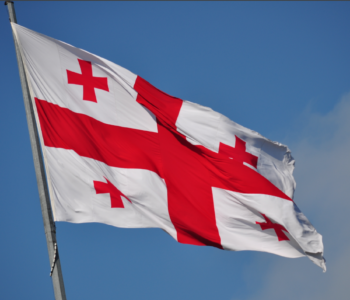
The undersigned press freedom and freedom of expression organizations are deeply concerned about incidents of intimidation, threats, and physical and verbal assaults on journalists covering Georgia’s parliamentary elections on October 26, 2024. MFRR documented at least 30 election-related media freedom violations involving 34 media workers.
Journalists and camera operators faced physical attacks on them and their equipment. This included an incident in Kutaisi where three individuals assaulted a CNews journalist at a polling station. In other cases, camera operators were attacked, and their equipment was damaged. Journalists were also insulted, threatened, and accused of defamation, referred to as “agents,” “stateless,” and “enemies of the country.” Notably, according to available information, the overwhelming number of individuals attacking journalists were supporters or representatives of the ruling Georgian Dream party.
We are also concerned that two foreign journalists who intended to cover the elections were denied entry to Georgia. Czech journalist Ray Baseley told IPI that he was detained at the airport for 34 hours, denied contact with his lawyer for 20 hours, and held under constant surveillance. Swiss photojournalist Stephan Goss was similarly detained overnight for 11 hours in the airport. No explanation for the decision was provided to any of these journalists besides an official document citing “other cases envisaged by Georgian legislation” for the entry denial.
We believe that these attacks and restrictions should be seen in the context of an overall deterioration of the situation for media freedom in the country, as documented by the recent mission to Georgia. The mission found that journalists operate in an extremely hostile pre-election environment, and are frequently subjected to smear campaigns, online attacks, and insults from public officials, unknown individuals, and even other media workers. The mission also found that most cases of violence against journalists are not effectively investigated and prosecuted. As a result, the mission found that journalism has become a dangerous profession in Georgia.
Free and fair elections cannot be conducted without a safe environment for the press. Journalists’ work is essential to expose misconduct before and during elections and help citizens make informed decisions.
We urge Georgian authorities to end attacks on journalists and to thoroughly investigate all incidents of violence. They must immediately put an end to the worrying practice of barring foreign journalists from entering the country and ensure that all legislation applicable to the media and civil society fully complies with international and regional human rights standards. We furthermore urge the international community to place effective pressure on Georgia to uphold press freedom and secure a safe environment for journalists.
Signed by:
International Press Institute (IPI)
European Centre for Press and Media Freedom (ECPMF)
ARTICLE 19 Europe
The European Federation of Journalists (EFJ)
OBC Transeuropa (OBCT)
Free Press Unlimited (FPU)
This statement was coordinated by the Media Freedom Rapid Response (MFRR), a Europe-wide mechanism which tracks, monitors and responds to violations of press and media freedom in EU Member States, Candidate Countries and Ukraine.
Belgium: Serious concerns over cases of preventive censorship involving four media outlets
The Media Freedom Rapid Response (MFRR) partners strongly condemn the numerous judicial decisions aimed at preventing the publication of information by four Belgian media outlets. The return of preventive censorship, which the Belgian Constitution prohibits, marks an alarming deterioration of press freedom in Belgium.
On 10 October, the President of the Court of First Instance in Liège issued a “suspension order” to prevent the publication of an article of public interest in the daily newspaper Le Soir. The censored article concerned the legal consequences of an investigation into tax offences involving Maxime Degey, a local politician running for the municipal elections taking place on 13 October, and set to become the next mayor of Verviers (Liege province). On the pretext of a serious threat to the candidate’s “right to honour, reputation, and respect for private life”, the daily Le Soir and the Rossel group were silenced, three days before the vote. In addition, the order prohibited the media from disclosing the pleadings against Degey, on penalty of a 50,000 euro fine for non-compliance.
A few weeks earlier, the French-speaking Brussels Business Court declared itself competent to rule on the possible censorship of an RTBF investigation before its broadcast. The dispute concerned the RTBF investigation ‘Bailiffs, the debt business’ for its ‘#Investigation’ programme, which denounced alleged illegal practices by bailiffs. Named in the investigation, the bailiff company Leroy took legal action to have all references to its name removed before the broadcast, on pain of a €50,000 fine, claiming unfair commercial practices under the Commercial Code. Although the court ruled on 4 September that there was insufficient evidence to prove denigration, the referral of the case to the Business Court – which is not competent for ruling on press matters – set a dangerous precedent. By agreeing to consider such a request for preventive censorship, the court is acknowledging the possibility of misusing commercial law in the name of unfair practices to silence critical reporting.
Another ongoing procedure, initiated by the Belgian Minister of the Interior, aims to delete a total of five articles of the Sudmedia group on the Qatargate corruption scandal and to prevent the group’s media from covering this topic in the future.
The MFRR urges officials to refrain from censorship practices, and instead strengthen the crucial protection of the journalists.
Such cases of preventive censorship violate the fundamental right of freedom of expression enshrined in the Belgian constitution (Article 19) as well as Article 10 of the European Convention on Human Rights. Under Article 25, the Belgian Constitution explicitly prohibits censorship, stating “The press is free; censorship can never be imposed”. A prohibition that was recently reiterated by the Ghent Court of Appeal on 28 March 2024 in the dispute between VTM TV channel and Het Laatste Nieuws and the political party Vooruit, in which Conner Rousseau, the president of Vooruit, had obtained at first instance a ban on the publication of critical articles about him.
Under no circumstances should the law be misused to silence journalists and hinder access to information of public interest. In light of this worrying development for press freedom, the Consortium calls on the judiciary to uphold the fundamental right to freedom of expression and to strengthen the protection of the media reporting on matters of public interest. The MFRR will continue to monitor the situation closely in order to prevent further violations of Belgian law and European standards, as such illegal practices are a dangerous threat to democracy.
Signed by:
The European Federation of Journalists (EFJ)
International Press Institute (IPI)
Free Press Unlimited (FPU)
OBC Transeuropa (OBCT)
European Centre for Press and Media Freedom (ECPMF)
This statement was coordinated by the Media Freedom Rapid Response (MFRR), a Europe-wide mechanism which tracks, monitors and responds to violations of press and media freedom in EU Member States, Candidate Countries and Ukraine.
Turkey: Press freedom and freedom of expression groups, media outlets and civil society condemn regulator’s decision to shutter Açık Radyo
The MFRR partners, along with 56 press freedom and freedom of expression groups, media outlets and civil society organizations, condemn the official revocation of the terrestrial broadcasting license of independent radio station Açık Radyo by Turkey’s broadcast regulator, RTÜK (Radio and Television Supreme Council). This action marks a severe blow to independent radio broadcasting in Turkey, silencing a platform known for promoting diverse, critical voices and addressing issues of profound public interest.
(Turkish below)
Açık Radyo, an independent and non-profit media organisation founded in 1995, has long been a vital source of free expression in Turkey. Over the past three decades, it has provided an indispensable space for debates on crucial topics ranging from war and peace, environmental and climate struggles to public health, gender equality, and multiculturalism. The decision to revoke its license threatens not only the future of this essential platform but also the broader landscape of independent media in Turkey.
We call on Turkish authorities to fulfil their obligations to protect freedom of the press and expression in line with the Constitution of the Republic of Turkey and the European Convention on Human Rights. We urge the immediate reinstatement of Açık Radyo’s broadcasting license, ensuring that media outlets in Turkey can operate and enable discussion on matters of public interest without fear of reprisal.
Request for “stay of execution” rejected
On July 10, the Ankara 21st Administrative Court had decided to suspend the execution of the case in question until a new decision is made, stating that suspension of the program broadcast could cause irreparable damage. RTÜK then objected to this decision of the court. On August 9, the Ankara 10th Regional Administrative Courtrejected RTÜK’s objection because there was no violation of the law in the given decision.
However, the Ankara 21st Administrative Court, with a new decision, this time ruled to “reject the request for stay of execution”. Açık Radyo will object to this decision within the legal framework.
Decision to revoke the license
Turkey’s broadcast regulator had penalised Açık Radyo in May following the statements of a guest who participated in the April 24 broadcast of the program called Açık Gazete, saying, “(…) the 109th anniversary of the deportations and massacres, referred to as genocide, that occurred on Ottoman soil. The Armenian genocide commemoration was banned again this year, as you know.” RTÜK had imposed an administrative fine and a five-day broadcast suspension penalty on the channel under Article 8 of the Radio and Television Broadcasting Law No 6112for allegedly “inciting the public to hatred and hostility or creating feelings of hatred in society.” Açık Radyo had paid the fine but continued broadcasting.
After evaluating that the conditions specified in the sanction had been violated, RTÜK then decided to revoke Açık Radyo’s broadcasting license in July. However, this decision was not communicated to Açık Radyo at the time due to the ruling for stay of execution. Following the rejection of request for stay of execution in the meantime, the decision to revoke the terrestrial broadcasting license was only notified on October 11. As per the decision, the station’s terrestrial broadcasting was shut down on October 16 at 13:00.
Açık Radyo, an independent and non-profit media organisation launched in 1995, invited all its listeners, professional organisations, and the international public to support them against this decision.
Censorship of independent media and threat to freedom of information
The decision by Turkey’s broadcast regulator to revoke Açık Radyo’s license has significant implications for media freedom and public access to information. A terrestrial broadcasting license allows a station to transmit audio content via radio waves. With this decision, Açık Radyo will no longer be able to broadcast on the 95.0 FM frequency. This action effectively limits the station’s ability to reach its audience through traditional radio channels, restricting the public’s access to diverse viewpoints and information.
The revocation of Açık Radyo‘s terrestrial broadcasting license, as the station approaches its 30th anniversary in November 2024, represents a serious escalation in Turkey’s efforts to suppress independent media and is in direct violation of the exercise of the right to freedom of expression as protected under Turkey’s Constitution and the European Convention on Human Rights. The station’s closure would deprive the society in Turkey of a unique, independent voice committed to pluralism.
As undersigned press freedom and freedom of expression groups, media outlets and civil society organisations, we call on RTÜK to uphold its mandate to protect media pluralism and freedom of expression, immediately reverse its decision to revoke Açık Radyo’s broadcasting license and to cease its censorship of critical and independent outlets like Açık Radyo.
Signed by:
International Press Institute (IPI)
AGOS
Aposto
Apoyevmatini
Aras Publishing
ARTICLE 19 Europe
Articolo 21
Aso Press
Association of Journalists (Ankara)
BirGün Newspaper
Botan International
Citizens’ Assembly
Civic Space Studies Association
Coalition For Women In Journalism (CFWIJ)
Committee to Protect Journalists (CPJ)
Danish PEN
Democracy Now!
Dicle Fırat Journalists Association (DFG)
Diken
dokuz8HABER
Dünya Mirası Adalar
European Centre for Press and Media Freedom (ECPMF)
European Federation of Journalists (EFJ)
Fayn
Foreign Media Association Turkey (FMA)
Freedom House
Gazete Duvar
IFEX
International Federation of Journalists (IFJ)
IPS Communication Foundation / Bianet (IPS/BIA)
İstos Publishing
Journalists’ Union of Turkey (TGS)
Journo.com.tr
Kaos GL
Kapsül
Marksist.org
Media and Law Studies Association (MLSA)
Media and Migration Association (MMA)
Media Research Association (MEDAR)
Mesopotamia Women Journalists Association (MKG)
Munzur Press
Olmaz Media
Osservatorio Balcani Caucaso Transeuropa (OBCT)
P24 Platform for Independent Journalism
PEN America
PEN Canada
PEN International
PEN Norway
PEN Sweden
Podfresh
Progressive Journalists Association (PJA)
Scrolli
Southeastern Journalists Association (GGC)
South East Europe Media Organisation (SEEMO)
T24
Teyit
The Four-Legged City: Urban, Nature, Animal Studies Association
This statement was produced by IPI as part of the Media Freedom Rapid Response (MFRR), a Europe-wide mechanism which tracks, monitors and responds to violations of press and media freedom in EU Member States and candidate countries, funded by the European Commission.
Türkiye: Basın ve ifade özgürlüğü, medya ve sivil toplum kuruluşları, RTÜK tarafından Açık Radyo’nun karasal yayınının kesilmesini kınıyor
Uluslararası Basın Enstitüsü (IPI), aşağıda imzası bulunan 60 basın ve ifade özgürlüğü, medya ve sivil toplum kuruluşuyla birlikte, Türkiye’nin yayın düzenleyicisi RTÜK’ün bağımsız radyo istasyonu Açık Radyo’nun karasal yayın lisansını resmi olarak iptal etmesini kınıyor. Çeşitli ve eleştirel sesleri öne çıkarmasıyla ve kamuoyunu ilgilendiren konuları aydınlatmasıyla bilinen Açık Radyo’nun susturulması Türkiye’de bağımsız radyo yayıncılığına ağır bir darbedir.
1995’te kurulan bağımsız ve kâr amacı gütmeyen bir medya kuruluşu olan Açık Radyo, uzun zamandır Türkiye’de ifade özgürlüğünün hayati bir kaynağı olmuştur. Son otuz yıldır, savaş ve barıştan, çevre ve iklim mücadelelerine, halk sağlığına, cinsiyet eşitliğine ve çok kültürlülüğe kadar uzanan önemli konulardaki tartışmalar için vazgeçilmez bir alan sağlamıştır. Radyo ve Televizyon Üst Kurulu’nun (RTÜK) kararı yalnızca bu elzem platformun geleceğini değil, aynı zamanda Türkiye’deki bağımsız medyanın varlığını da daha fazla tehdit etmektedir.
Türkiye’deki yetkilileri, Türkiye Cumhuriyeti Anayasası ve Avrupa İnsan Hakları Sözleşmesi doğrultusunda basın ve ifade özgürlüğünü koruma yükümlülüklerini yerine getirmeye ve Açık Radyo’nun lisansını iade etmeye çağırıyoruz. Türkiye’deki medya kuruluşları, kamuyu ilgilendiren konularda yaptırım korkusu olmaksızın tartışmaya olanak sağlamakta özgür olmalıdır.
“Yürütmenin durdurulması” talebi reddedildi
10 Temmuz’da Ankara 21’inci İdare Mahkemesi, program yayınının durdurulmasının telafisi güç zarar doğurabilecek nitelikte bulunduğundan, yeni bir karar verilinceye kadar, dava konusu işlemin yürütmesinin durdurulmasına karar vermişti. Mahkemenin bu kararına karşı RTÜK itiraz etmişti. 9 Ağustos’ta iseAnkara Bölge 10’uncu İdare Mahkemesi, verilen kararda yasaya aykırılık bulunmadığı için RTÜK’ün itirazını reddetmişti.
Ancak Ankara 21’inci İdare Mahkemesi yeni bir karar ile bu kez “yürütmenin durdurulması isteminin reddine” karar verdi. Açık Radyo yasal çerçevede bu karara itiraz etmeye hazırlanıyor.
Lisans iptali kararı
RTÜK, Açık Radyo’da Açık Gazete adlı programın 24 Nisan tarihli yayınına katılan konuğun “(…) Ermeni, yani Osmanlı topraklarında gerçekleşen tehcir ve katliamların, soykırım olarak adlandırılan katliamların 109. Yıldönümü, sene-i devriyesi. Bu yıl da yasaklandı biliyorsunuz Ermeni soykırım anması” şeklindeki ifadelerinin ardından Mayıs ayında Açık Radyo’ya ceza vermişti. RTÜK, radyoyu Radyo ve Televizyonların Kuruluş ve Yayın Hizmetleri Hakkında 6112 Sayılı Kanun’un 8. maddesi uyarınca “toplumu kin ve düşmanlığa tahrik etmek veya toplumda nefret duyguları oluşturmak” iddiasıyla idari para cezası ve beş günlük yayın durdurma cezasına çarptırmıştı. Açık Radyo, para cezasını ödemiş ancak yayına devam etmişti.
RTÜK, yaptırımda belirtilen koşulların ihlal edildiğini değerlendirdikten sonra Temmuz ayında Açık Radyo’nun yayın lisansını iptal kararı almıştı. Fakat bu karar, Açık Radyo’ya tebliğ edilmemişti. Yürütmeyi durdurma talebinin reddedilmesinin ardından karasal yayın lisansı iptali kararı ancak 11 Ekim’de tebliğ edildi. Karar doğrultusunda karasal yayın 16 Ekim saat 13:00 itibariyle kesildi.
1995 yılında kurulan, bağımsız ve kâr amacı gütmeyen bir medya kuruluşu olan Açık Radyo, tüm dinleyicilerini, meslek örgütlerini ve uluslararası kamuoyunu bu karara karşı kendilerine destek olmaya davet etti.
Bağımsız medyaya yönelik sansür ve bilgi edinme hakkına tehdit
Türkiye’nin yayın düzenleyicisi RTÜK’ün Açık Radyo’nun lisansını iptal etme kararı, medya özgürlüğü ve halkın bilgiye erişimi açısından önemli sonuçlar doğurmaktadır. Karasal yayın lisansı, bir istasyonun radyo dalgaları aracılığıyla ses içeriği iletmesine olanak tanır. Bu kararla birlikte, Açık Radyo artık 95.0 FM frekansında yayın yapamayacak. Bu karar, istasyonun geleneksel radyo kanalları aracılığıyla dinleyicilerine ulaşmasını etkili bir şekilde sınırlayacak ve halkın farklı görüş ve bilgilere erişimini kısıtlayacaktır.
Açık Radyo‘nun karasal yayın lisansının radyonun Kasım ayında 30. yayın yılına yaklaşırken iptal edilmesi, Türkiye’nin bağımsız medyayı susturma çabalarında ciddi bir tırmanışı temsil etmektedir. Bu karar, Türkiye Anayasası ve Avrupa İnsan Hakları Sözleşmesi tarafından korunan ifade özgürlüğünün doğrudan ihlâli niteliğindedir. Çok sesliliğe adanmış bağımsız bir platform olan Açık Radyo’nun kapatılması, toplumu benzersiz ve bağımsız bir sesten mahrum bırakacaktır.
Aşağıda imzası bulunan basın ve ifade özgürlüğü, medya ve sivil toplum kuruluşları olarak, RTÜK’ü medyada çoğulculuğu ve ifade özgürlüğünü koruma görevini yerine getirmeye davet ediyoruz. Açık Radyo’nun yayın lisansının iptaline yönelik kararını derhal geri çekmesini ve Açık Radyo gibi eleştirel ve bağımsız kuruluşlara yönelik sansüre son vermesini talep ediyoruz.
İmzalayanlar
Uluslararası Basın Enstitüsü (IPI)
AGOS
Aposto
Apoyevmatini Gazetesi
Aras Yayıncılık
ARTICLE 19 Avrupa
Articolo 21
Aso Press
Avrupa Basın ve Medya Özgürlüğü Merkezi (ECPMF)
Avrupa Gazeteciler Federasyonu (EFJ)
BirGün Gazetesi
Botan International
Çağdaş Gazeteciler Derneği (ÇGD)
Danimarka PEN
Democracy Now!
Dicle Fırat Gazeteciler Derneği (DFG)
Diken
dokuz8HABER
Dört Ayaklı Şehir: Kent, Doğa, Hayvan Çalışmaları Derneği
Bu açıklama, Avrupa Komisyonu tarafından finanse edilen ve AB Üye Devletleri ile aday ülkelerdeki basın ve medya özgürlüğü ihlâllerini belgeleyen Avrupa çapında bir mekanizma olan Medya Özgürlüğü Acil Müdahale (MFRR) kapsamında Uluslararası Basın Enstitüsü (IPI) tarafından hazırlanmıştır.
Serbian judge’s lawsuits set to chill press freedom
The Media Freedom Rapid Response (MFRR) expresses grave concern regarding the legal threats facing the Serbian investigative news organization KRIK and its journalists. These abusive legal actions include demands for imprisonment and bans from journalism. We stand with the journalists on trial, and urge Serbia to implement anti-SLAPP safeguards to protect independent media.
KRIK is currently facing 16 Strategic Lawsuits Against Public Participation (SLAPPs), vexatious legal actions intended to intimidate the defendants rather than seek justice. Two of these, whose trial began recently, were initiated by Appellate Court Judge Dušanka Đorđević and her husband Aleksandar, a lawyer engaged by the Ministry of Finance.
The couple accuses KRIK’s Stevan Dojčinović and Bojana Pavlović of data protection violations, after the journalists published details about Judge Đorđević’s assets and career in an award winning database aiming to increase transparency in the judiciary. According to KRIK, all the data was lawfully obtained from publicly accessible sources.
The plaintiffs seek penalties of €6,500 in damages, 10-month prison sentences, and 2-year bans on journalism for the accused journalists. Any conviction would set a dangerous precedent and severely undermine press freedom.
The lawsuits exhibit all the characteristics of SLAPPs, as they seem to aim to intimidate the journalists rather than addressing legitimate legal concerns.
The MFRR consortium believes that the case is part of a broader campaign to silence KRIK for its investigative journalism. The outcome will be a test for the Serbian judiciary’s independence and commitment to the rule of law. It will also be a test of the judiciary’s ability to provide a fair trial and to ensure that the presiding judges are not unduly influenced by their colleagues bringing the case.
A guilty verdict will have a terrible chilling effect on the media and potentially spell the end of investigative public interest journalism in the country.
We stand in solidarity with KRIK and its journalists. The MFRR believes that this case presents all the features of a SLAPP and the relevant EU provisions, including early dismissal, should be taken into account by the judiciary. Furthermore, our consortium calls on the Serbian authorities to refer to the Council of Europe’s Recommendation on countering the use of SLAPPs, aligning domestic safeguards to prevent similar cases in the future with international human rights standards.
The MFRR will continue to monitor the case closely, to advocate for the public’s right to hold power accountable and against the erosion of independent journalism.
Signed by:
International Press Institute (IPI)
OBC Transeuropa (OBCT)
Free Press Unlimited (FPU)
This statement was coordinated by the Media Freedom Rapid Response (MFRR), a Europe-wide mechanism which tracks, monitors and responds to violations of press and media freedom in EU Member States, Candidate Countries and Ukraine.
Ukraine: MFRR and partners mourn death and demand justice for Victoria Roshchyna
The Media Freedom Rapid Response (MFRR) and partner organizations today mourn the death of Ukrainian journalist Victoria Roshchyna, who died in unclear circumstances while in Russian detention, and whose death was confirmed by Russian and Ukrainian authorities on Thursday. We welcome the opening of an investigation by Ukrainian authorities on grounds of “war crime combined with premeditated murder” and demand that Russian authorities do the same to elucidate the circumstances of Roshchyna’s death and bring to justice all those who could be responsible.
Roshchyna, a freelance journalist with Ukrainska Pravda, a major Ukrainian publication, and several other leading Ukrainian outlets, left Kyiv in late July 2023with the intention to reach Russian-occupied territory in southeastern Ukraine. Soon after her departure, she went missing, with many of her colleagues expressing their fear that she was most likely being held by Russian forces.
In May 2024, nearly a year after her departure, Roshchyna’s family reported that Russian authorities hadconfirmed to them that the journalist was being held in Russian custody. However, the charges against her, as well as the place of her detention remained unknown.
Following the announcement of her death, reportsemerged suggesting that Roshchyna had spent the past four months in an individual prison cell in the Russian city of Taganrog, which is located immediately next to the Ukrainian border. Prior to this, it has been reported that she was held in pre-trial detention by Russian forces in Berdyansk, a city in southeastern Ukraine currently under Russian occupation.
According to Russian authorities, Roshchyna diedon September 19. Unconfirmed reports by Ukrainian mediasuggest that she passed away while being transported from Taganrog to Moscow. According to the same reports, Russia was preparing to include Roshchyna into a prisoner exchange with Ukraine.
While it is unclear what location the journalist managed to reach as part of the reporting trip she began in late July 2023, it was known that she planned to report from regions of Ukraine under Russian occupation.
“Victoria was herself from the Zaporizhia region,” Ukrainska Pravda editor-in-chief Sevgil Musayevatold IPI in October 2023, when Roshchyna’s disappearance was first made public. “She saw it as her mission to tell the stories of the people under occupation and when fears grew that the Russian military may be planning to blow up the Zaporizhia nuclear power plant, she wanted to go.”
Roshchyna was one of the very few Ukrainian journalists to travel to Russian-occupied territories to cover the impact of the war. In March 2022, she was taken captive by Russian forces while reporting near Mariupol, when the city was under a prolonged siege by Russian forces. She was released ten days later and continued working as a journalist from Kyiv. She documented her experiences in captivity here.
MFRR partners, Index on Censorship and Reporters Without Borders (RSF) reiterate their support of journalists who continue to report on Russia’s full-scale invasion of Ukraine. We mourn the death of yet another journalist who lost her life while attempting to cover the consequences of this brutal invasion, and demand justice for her and other deceased colleagues.
Signed by:
International Press Institute (IPI)
European Centre for Press and Media Freedom (ECPMF)
The European Federation of Journalists (EFJ)
Index on Censorship
Reporters Without Borders (RSF)
ARTICLE 19 Europe
OBC Transeuropa (OBCT)
International Women’s Media Foundation (IWMF)
Committee to Protect Journalists (CPJ)
This statement was coordinated by the Media Freedom Rapid Response (MFRR), a Europe-wide mechanism which tracks, monitors and responds to violations of press and media freedom in EU Member States, Candidate Countries.
Cyprus pauses fake news law to consult media stakeholders
The Media Freedom Rapid Response (MFRR) consortium welcomes the decision to pause the passage of the law criminalizing fake news and to hold an expert committee meeting on media freedom in Cyprus. The discussion comes at a critical juncture, as concerns grow over draft legislation to criminalize offensive content and “fake news”. A freshly published article on media freedom in Cyprus gives an overview on the current situation for journalists on the island.
The meeting, set up by the Cypriot Minister of Justice and scheduled for 11 October 2024, follows the discussion of the Cyprus Parliament’s Legal Committee on a possible amendment to the nation’s Criminal code, aiming to curb “fake news”.
The Union of Cyprus Journalists, the Cyprus Committee of Media Ethics, the Cyprus Association of Newspaper & Magazine Publishers, the Cyprus Organization of Internet Publishers, the Cyprus Institute of Mass Communication and the Cyprus Bar Association have been invited to attend. All organizations will have a representative and their legal counsel present.
The International Press Institute (IPI), as part of the MFRR, has published an overview of the current media landscape in Cyprus, and the risks to media freedom posed by the draft law.
The MFRR has warned that the amendment could stifle independent journalism and encourage self-censorship. Our consortium advocates for media regulations that promote transparency and free expression, while opposing punitive measures that could infringe on these rights. We caution governments against adopting legal provisions criminalizing disinformation, given the risk of a chilling effect on press freedom and free speech.
Ahead of the meeting, the MFRR renews its call for alignment with international standards, urging the Cypriot government to withdraw the proposed amendment.
Signed by:
International Press Institute (IPI)
European Centre for Press and Media Freedom (ECPMF)
European Federation of Journalists (EFJ)
Free Press Unlimited (FPU)
OBC Transeuropa (OBCT)
This statement was coordinated by the Media Freedom Rapid Response (MFRR), a Europe-wide mechanism which tracks, monitors and responds to violations of press and media freedom in EU Member States, Candidate Countries and Ukraine.
SafeJournalists and MFRR: Smear campaigns against independent media and civil society organizations must stop
SafeJournalists Network and organizations of the Media Freedom Rapid Response (MFRR) strongly condemn the attacks on the Council of Media Ethics of Albania (KSHM) and the think tank – Center Science and Innovation for Development (SCiDEV) that has issued a shadow report on media freedom in Albania, as well as on researcher Blerjana Bino.
In early October 2024, the Council of Media Ethics of Albania (KSHM) became the target of coordinated smear campaigns by two online platforms, Sot.com.al and Prapaskena.com. These incidents mark a disturbing trend of hostility toward independent media and civil society organizations, heightening concerns among watchdog groups and advocates for media freedom.
On 6 October, Prapaskena.comescalated the attacks by targeting Blerjana Bino, a SafeJournalists researcher and executive director of SCiDEV, along with the independent think tanks SCiDEV and OBCT. The attack came in response to their publication of a shadow report on media freedom in Albania. Published on 25 July, the report focused on the third section of the Commission’s 2024 Rule of Law Report, dedicated to media freedom and pluralism, to provide an updated analysis of the Albanian media landscape, including remaining and emerging challenges.Prapaskena.com slandered Bino, referring to her as “The ‘Spider’ of civil society funds” and falsely accusing her of producing biased reports on attacks against journalists. The picture of Bino used to illustrate the defamatory article also endangered Bino’s safety by inciting hatred against her. These defamatory attacks undermine the credibility of independent voices and organizations working to protect media freedom and uphold ethical journalism in Albania.
The initial attack, launched by Sot.com.al, followed a ruling by KSHM’s Board of Ethics regarding a complaint filed against the Sot media outlet. In what appeared to be a retaliatory move, Sot.com.al framed KSHM’s decision as a violation of press freedom, portraying the Board’s oversight as oppressive and unjust. This response not only distorts the role of KSHM in promoting ethical journalism but also threatens the integrity of the self-regulatory framework designed to uphold media standards. KSHM strongly condemned the article as slanderous, highlighting a concerning trend of media retaliation against regulatory bodies rather than engaging constructively with ethical standards in journalism.
Simultaneously, Prapaskena.com launched its attack, shortly after KSHM issued a public statement opposing the closure of online platforms in Albania. Echoing the rhetoric of Sot.com.al, Prapaskena.com used similar inflammatory language to discredit KSHM’s stance, further escalating the campaign against independent oversight and ethical journalism in the country.
These coordinated attacks, which aim to discredit ethical journalism and undermine the work of independent organizations and researchers in protecting media freedom and journalist safety in Albania, are deeply concerning and represent a broader trend of intimidation and hostility toward independent civil society in Albania. Such tactics harm not only the individuals and organizations involved but also the core principles of press freedom, transparency, and accountability that are fundamental to a democratic society.
SafeJournalists Network and the MFRR call for an immediate cessation of these attacks and urge all stakeholders to respect the role of independent self-regulatory bodies, think tanks, and researchers in promoting media freedom and integrity, ethical standards, and transparency in the media sector. To further strengthen an environment that is enabling media freedom and the safety of journalists, we welcome and support scientific scrutiny, and evidence-based and open dialogue on issues related to media freedom and the protection of journalists.
We stand in solidarity with KSHM, SCiDEV, and Blerjana Bino, and we call on the Albanian authorities to ensure that independent media and civil society organizations can carry out their vital work without fear of retaliation or defamation.
In addition, SafeJournalists Network and MFRR strongly defend their colleague Blerjana Bino and reaffirm their unwavering support for her critical, professional, and ethical work in advancing media freedom and transparency in Albania.
Signed by:
SafeJournalists Network
Association of Journalists of Kosovo
Association of Journalists of Macedonia
BH Journalists Association
Croatian Journalists’ Association
Independent Journalists Association of Serbia
Trade Union of Media of Montenegro
Media Freedom Rapid Response
The European Federation of Journalists (EFJ)
OBC Transeuropa (OBCT)
European Centre for Press and Media Freedom (ECPMF)
This statement was coordinated by the Media Freedom Rapid Response (MFRR), a Europe-wide mechanism which tracks, monitors and responds to violations of press and media freedom in EU Member States, Candidate Countries and Ukraine.
This website uses cookies to improve your experience. We'll assume you're ok with this, but you can opt-out if you wish. Cookie settingsACCEPT
Privacy & Cookies Policy
Privacy Overview
This website uses cookies to improve your experience while you navigate through the website. Out of these cookies, the cookies that are categorized as necessary are stored on your browser as they are essential for the working of basic functionalities of the website. We also use third-party cookies that help us analyze and understand how you use this website. These cookies will be stored in your browser only with your consent. You also have the option to opt-out of these cookies. But opting out of some of these cookies may have an effect on your browsing experience.
Necessary cookies are absolutely essential for the website to function properly. This category only includes cookies that ensures basic functionalities and security features of the website. These cookies do not store any personal information.
Any cookies that may not be particularly necessary for the website to function and is used specifically to collect user personal data via analytics, ads, other embedded contents are termed as non-necessary cookies. It is mandatory to procure user consent prior to running these cookies on your website.
Functional cookies help to perform certain functionalities like sharing the content of the website on social media platforms, collect feedbacks, and other third-party features.
Performance cookies are used to understand and analyze the key performance indexes of the website which helps in delivering a better user experience for the visitors.
Analytical cookies are used to understand how visitors interact with the website. These cookies help provide information on metrics the number of visitors, bounce rate, traffic source, etc.
Advertisement cookies are used to provide visitors with relevant ads and marketing campaigns. These cookies track visitors across websites and collect information to provide customized ads.