Detail of the national flag of Slovakia waving in the wind with blurred european union flag in the background on a clear day. Democracy and politics. European country. Library

Slovakia: Government pushes ahead with ambitious media reform program

Slovakia: Government pushes ahead with ambitious media reform program

New laws on source protection and media ownership transparency provide model for neighbouring countries

By IPI contributor Miroslava Kernová, Omediach.com

In recent months Slovakia has passed important legislative changes which will ensure a better media environment and move the country closer to standards outlined by the recently published European Media Freedom Act (EMFA).

Moreover, in addition to the laws already passed, others are in preparation. If the full package is achieved, Slovakia can become a leading example of press freedom for other EU countries, such as Hungary or Poland, where press freedom continues to face major challenges from media capture.

In its program statement (2020-24), the current government promised a complex reform which would reflect modern changes in the media environment. The changes this reform introduces and proposes are revolutionary by Slovak standards.

The problem with previous Slovak media legislation was that it did not reflect the online environment, titled the scales in favour of political forces, and allowed ways for these forces to influence public media.

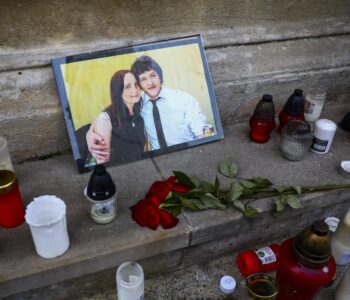
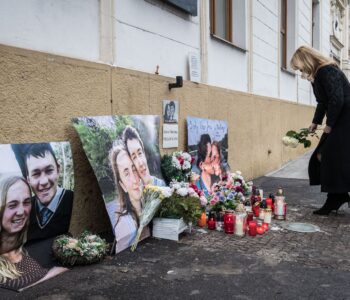
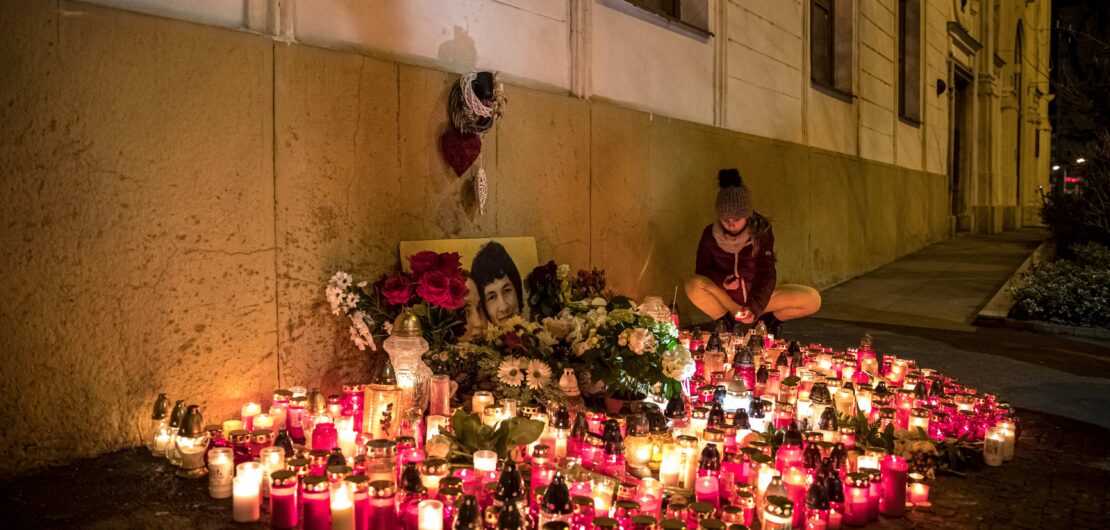
The motivation for the change is also public pressure for better protection of journalists after the brutal murder of journalist Ján Kuciak and his girlfriend Martina Kušnírová in 2018.


Reforms passed already

In August, the parliament passed a new Act on Media and the Act on Publications, replacing two outdated laws, the Press Act and the Compulsory Copies Act.

These new laws strengthen the protection of journalists, extend source protection to online media, and bring greater transparency to media ownership and funding, which strengthens their credibility against media disseminating disinformation.

Firstly, under the new Act on Media and Act on Publications, the right to protect the confidentiality of sources – which was in the past only guaranteed for broadcast and print media journalists – has been extended to include journalists from online media.

Secondly, media outlets must also declare any investor or donor who invests more than €2,000 per year. This change should make the media environment in Slovakia more transparent. A number of anonymous sources of disinformation, pro-Russian or politically motivated websites operating in Slovakia would have to declare their real “final beneficiaries” in a public register, which will allow anyone to verify whose is behind these outlets. For non-compliance with this obligation, media may receive a warning or a fine of up to €20,000.

Thirdly, the new law also strengthens the protection of minors, improves access to audio-visual content for the disabled by increasing quotas for multimodal access, and specifically promotes broadcasting for national minorities and ethnic groups in public service broadcasting.

It also regulates the conditions for television and radio, regardless of whether they broadcast standardly or online, and introduces several rights and obligations for television and radio. Every viewer will now be able to find out who owns a given medium and there will be a register where all the information will be available. This will be administered by the Ministry of Culture, which is to establish the register within 30 months of the adoption of the law.

In addition, the law redefines general rules for advertising in both public and private media and, in line with European requirements, introduces the notion of community periodicals into the Slovak legislation and allows for the application of self-regulatory mechanisms.


Last minute amendments from politicians

The downside of the new media laws, however, is that MPs in the last steps of finalising the legislation process introduced a “right to expression” for public officials into it, thus securing for themselves more media space than ordinary citizens. The right to expression for public officials was only included in the bill at the end of the second reading in parliament – as amendments by MPs from Sme rodina and OĽaNO.

“Politicians have their channels of communication. The most followed profiles on social networks belong to politicians, they express themselves in press conferences that are broadcast. So there is no reason for a politician to exercise his right to express himself in the exercise of his public office,” media lawyer Tomáš Kamenec told the daily SME.

In the original draft law, the right to expression could only be used to deny, supplement, clarify or explain factual allegations. Parliament eventually approved amendments that extended the right to expression to value judgments based (columns or opinion pieces) on disputed claims.

Alexej Fulmek from the Association of Print and Digital Media (ATDM) and CEO of the Petit Press publishing house considers the adoption of the “right to expression” as a step backwards. “Unfortunately, politicians in Slovakia are mostly under the impression that the media are causing harm to this country and that they are the ones who have to fight them. They don’t understand that the role of the media is to be critical, especially towards politicians. In this atmosphere the idea prevailed that politicians need some ‘stick’ against the media. This probably seemed to them as an adequate solution,” Fulmek told Strategie magazine.


Increasing protection for journalists

Additional planned changes deal with the protection of journalists. Draft amendments to the Criminal Code would remove the long-criticised prison sentence for defamation, which has been a major threat to journalists in Slovakia for years. Under the current law, defamation carries a prison sentence of two to eight years. Under the new legislation, defamation would not carry a prison sentence.

The planned amendment to the criminal code also introduces so-called “special motives” for crimes, which will include a crime committed against someone for exercising of their job, profession or function. This may contribute to better protection of journalists and other professions (doctors, teachers, security forces…) who face many threats and can face attacks in their work. A crime committed with a specific motive will carry higher penalty.

For now, the draft of this law remains parked at the ministry of culture. Questions remain over whether the government will find the political will to pass such legislation.


Further changes planned

The Ministry of Justice has also proposed amendments to extend the scope of the Freedom of Information Act. The amendment expands both the scope of information to be provided and the persons obliged to provide it. For example, the draft also extends the list of companies that are obliged to provide information to state-owned companies and second- and third-tier subsidiaries of state-owned companies, which are not covered by the current law.

The proposal also extends the mandatory disclosure of information to persons seeking public office as well as to public officials themselves. It also introduces an obligation to publish all amendments to contracts subject to mandatory publication.

The Ministry of Culture wants to implement the PersVeilig (Press Safe) platform for greater protection of journalists in Slovakia, following the example of the Netherlands.

In 2019, the PersVeilig platform was launched in the Netherlands to improve the safety of journalists. The platform was also created because although journalists faced threats, they often did not report them because they felt they were not sufficiently dealt with by the police. PersVeilig improves cooperation between journalists, their employers, the police and prosecutors.

The Slovak Ministry of Culture wants to work with the Netherlands to improve the protection of journalists domestically. “We are not talking about whether it should be an organisation, a platform, a technical or procedural solution. What we want is to reach a concrete result that can be implemented and traced,” said Radoslav Kutaš, the ministry’s state secretary, told Denník N.

If all these plans are indeed implemented, Slovakia will meet many of the requirements of the European Media Freedom Act regarding of the protection of media pluralism and independence, and in some respects may even go beyond them, such as the ambition to create a special platform to protect journalists.


Challenges remain

Despite many positive ambitions, the media environment in Slovakia continues to face problems. Journalists, especially those from the opinion-making media, are constantly targets of verbal attacks from politicians, mainly from former Prime Minister Igor Matovic, but also from the opposition.

For example, the deputy chairman of the opposition Smer party, Ľuboš Blaha, regularly dehumanises journalists. Matovič, who leads the biggest party in parliament, also regularly attacks journalists on his Facebook page and recently accused unspecified media of corruption, “spreading lies” and compared the work of Slovak journalists to Nazi propaganda.

In Slovakia, the problematic environment for independent public service media also remains a major issue. The main problem is that both the director and the supervisory boards of Slovak Radio and Television (RTVS) are elected in parliament after political agreements are made. Politicians still have influence over the funding of public service media. Changes need to be made to guarantee that public service media management and funding are more independent and more resistant to political pressures.

Even if the political will is there, the road ahead contains multiple pitfalls. The forthcoming changes may be stalled by the current unstable political situation that brings about the possibility of the fall of the current government and of early national parliamentary elections, which may result in a government of such parties that do not favour the idea of a free media.

However, if the planned changes are passed, Slovakia would take major steps forward in strengthening the legal frameworks for media freedom and provide a positive example to follow for other EU Members States in Central and Eastern Europe in the years to come.
This article is part of IPI’s reporting series “Media freedom in Europe in the shadow of Covid”, which comprises news and analysis from IPI’s network of correspondents throughout the EU. Articles do not necessarily reflect the views of IPI. This reporting series is supported by funding from the Friedrich Naumann Foundation for Freedom and by the European Commisson (DG Connect) as part of the Media Freedom Rapid Response coalition.

MFRR 3 consortium logos
Library

Slovakia: Deputy PM’s attacks undermined government’s broader efforts to…

Slovakia: Deputy PM’s attacks undermined government’s broader efforts to strengthen press freedom

The undersigned international media freedom and journalists organisations today express dismay over the recent attempts by deputy Slovak Prime Minister Igor Matovič to denigrate the country’s media and warn they were undermining wider efforts by the government to improve the landscape for media freedom.

In recent weeks, Matovič, the former prime minister and current finance minister, launched numerous verbal attacks on the media, including insulting posts on Facebook which personally attacked the editor-in-chief of the newspaper Denník N, Matúš Kostolný, over a critical opinion piece.


Speaking in parliament, Matovič, who is also leader of the largest party in government, then accused unspecified media of being corrupt and during a speech on 29 September again accused the the country’s media of “spreading lies” and likened their journalism to Nazi propaganda.


These comments clearly overstepped the bounds of legitimate criticism and represented unacceptable attacks on independent journalism which were rightly condemned. Our organisations welcome Prime Minister Eduard Heger’s statement defending journalists and the criticism of the minister’s comments by nine MPs from his OĽANO party.


We also stand behind the powerful joint statement issued on September 30 by 22 of the country’s leading editors-in-chief, who condemned the minister’s rhetoric and refused to be pressured into silence for carrying out their role as public watchdogs.
While we note the statement of apology addressed by Matovič “to all honest journalists” on October 3, this will only have credibility if followed up by action. We therefore urge the minister to refrain from making any further unjustified accusations of the press and to recognise that public figures holding elected office have a duty to act responsibly and be prepared to accept a higher level of public scrutiny.


If repeated, Matovič’s attacks will undermine the coalition government’s broader efforts to improve the landscape for press freedom. The parliament has passed important bills strengthening the protection of the confidentiality of journalistic sources, as well as increasing transparency of media ownership and funding. The Justice Ministry has tabled amendments to widen the scope of the Freedom of Information Act and decrease prison sentences for defamation. While full justice for the 2018 assassination of the journalist Ján Kuciak and his fiancée has not yet been reached, Slovak law-enforcement authorities are prosecuting corruption reported by journalists. Internationally, Slovakia has worked towards an ambitious European Media Freedom Act.


Moving forward, we hope to see the government continue this reform agenda and for an end to all further verbal attacks against the media. Our organisations will continue to closely monitor the situation in Slovakia in the coming weeks and months.

Signed by:

  • Reporters Without Borders (RSF)
  • ARTICLE 19 Europe
  • European Centre for Press and Media Freedom (ECPMF)
  • European Federation of Journalists (EFJ)
  • Free Press Unlimited (FPU)
  • International Press Institute (IPI)
  • OBC Transeuropa (OBCT)

This statement was coordinated by the Media Freedom Rapid Response (MFRR), a Europe-wide mechanism which tracks, monitors and responds to violations of press and media freedom in EU Member States, Candidate Countries and Ukraine.

MFRR 3 consortium logos
Library

Slovakia: Remembering Ján Kuciak: On fourth anniversary of murder,…

Slovakia: Remembering Ján Kuciak: On fourth anniversary of murder, IPI renews call for justice

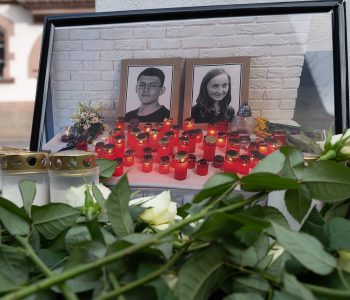
Retrial of suspected masterminds must exhaustively consider all evidence. Today marks four years since the brutal murder of Slovak journalist Ján Kuciak and his fiancée Martina Kušnírová in their home. The IPI global network today remembers Ján and Martina, and stands with their families, friends, and colleagues in the ongoing fight for justice. The retrial of the suspected masterminds, which begins later this month, must exhaustively consider all evidence in the case.

On February 21, 2018, Slovak investigative journalist Ján Kuciak and his fiancée, archeologist Martina Kušnírová, were brutally murdered in their home. As a journalist working for the online news site Aktuality.sk, Kuciak had uncovered allegations of tax fraud and financial crime implicating prominent business and political leaders in Slovakia. The double murder sparked the largest protests in Slovakia since the Velvet Revolution, and led to the resignations of Prime Minister Róbert Fico, Interior Minister Robert Kaliňák, Culture Minister Marek Maďarič, and Chief of Police Tibor Gašpar.

Four years after Kuciak’s murder, the trial of the alleged masterminds is still ongoing. The fight for justice remains open. Prosecutors have alleged that controversial businessman Marian Kočner ordered Kuciak’s killing in response to Kuciak’s coverage of Kočner’s political and financial dealings, and asked a trusted associate, Alena Zsuzsová, to arrange it. Kočner and Zsusová were acquitted by a criminal court in 2020 after a months-long trial.

Last year, however, the Slovak Supreme Court overturned the acquittal decision, ordering a retrial. The retrial will begin on February 28, 2022, with judges expected to take into account evidence that was excluded from the first round of proceedings. IPI has closely monitored the trial, including attending several hearings in-person.

“The IPI global network today remembers Ján and Martina, whose lives were viciously cut short”, IPI Deputy Director Scott Griffen said. “We will not forget them, and, together with the courageous media community in Slovakia, we will not stop fighting for justice. This case remains open until every single person who played a role in these murders is behind bars. As the retrial begins, the Specialized Criminal Court now has a clear task: it must exhaustively consider all evidence and the full circumstances of this case. The deficiencies identified by the Supreme Court must be addressed and the logic of the original ruling scrutinized.”

High hopes

“Today we remember Ján Kuciak and  Martina Kušnírová and we await the retrial on February 28”, Aktuality.sk Editor-in-Chief Peter Bárdy told IPI. “We have good hopes that justice will be brought to them. The Slovak Supreme Court, which overturned the acquittal of Kočner, said a lot of mistakes were made by the first court. This new case will include a lot of new evidence. I am looking towards the future, with fair and justified results. That is what I am expecting.”

Despite nationwide protests after Kuciak’s killing, Slovakia is still struggling with fair and independent journalism, Bárdy told IPI. “After the murder in 2018, and after all the protests that followed, people believed that we would start a new period. A more democratic period, a fairer period. As journalists too, we hoped to have a better position. That the politicians would accept that we are a pillar of democracy, that we’re not enemies of the politicians, or enemies of the state. But after this time, we see that that journey is not easy.”

Dangerous hostility

After Kuciak’s death, several politicians have continued to verbally attack journalists, such as former Prime Minister Igo Matovič, who last year wrote on his Facebook page that “the journalists with Kuciak’s quality are to be counted on two hands in Slovakia – the rest is often superficial, often biased”. “During Matovic’ leadership, we wrote many articles about his government”, Bardy said. “He took those as personal attacks and started to fire back at the media by insulting us. This is very dangerous, as it creates a hostile climate against journalists.”

Some of the worst attacks, however, have come from former Prime Minister Fico, who made headlines for calling journalists “dirty, anti-Slovak prostitutes” while still in office. Just last month, Fico referred to journalists at leading independent media outlets Denník N, Sme, and Aktuality as an “organized crime group, and said law enforcement should start investigating how these journalists damage the statehood and to what extent they attack the state bodies of the Slovak Republic”.

On February 28, Bardy himself will not attend Kočner’s retrial, due to limited space in the courtroom. “There is only space for one journalist per outlet, unfortunately. But one of our journalists will be there the whole time to cover the case. We will watch it closely and really hope justice will be brought to Ján, Martina and their families.”

This statement by IPI is part of the Media Freedom Rapid Response (MFRR), a Europe-wide mechanism which tracks, monitors and responds to violations of press and media freedom in EU Member States and Candidate Countries.

IPI as part of MFRR
Library

Slovakia: Two Denník N journalists face charges for Kuciak…

Slovakia: Two Denník N journalists face charges for Kuciak murder probe revelation

IPI calls for criminal indictment to be dropped immediately

  • UPDATE 21-09-2021: Shortly after publication of this article, it was reported that the Bratislava Regional Prosecutor’s Office has annulled the criminal indictment as illegal and unfounded. IPI welcomes this vital vindication of Denník N’s public interest reporting.


The IPI global network today condemns the criminal charges against two Slovak journalists from independent daily Denník N involving the publication of a 2018 article related to the Ján Kuciak murder investigation. IPI urges the authorities to immediately drop the indictment.

On September 20, it was reported that the Slovak police prosecutor’s office had filed charges against Denník N investigative journalist Monika Tódová and Deputy Editor-in-Chief Konštantín Čikovsky. The charges stem from a report published in October 2018 in which the journalists revealed that former journalist-turned-spy chief Peter Tóth had monitored several journalists at the behest of Marián Kočner, the alleged mastermind in the murder, including Kuciak and Tódová herself.

Police prosecutors have now accused both journalists of revealing confidential information by disclosing Tóth’s identity as a secret witness. If found guilty, they could spend up to one year in prison.

“The indictment of Monika Tódová and Konštantín Čikovský is a deeply disturbing attack on press freedom in Slovakia”, IPI Deputy Director Scott Griffen said. “Their reporting was accurate and clearly in the public interest. It is therefore outrageous that they are now facing criminal charges for doing their job. Moreover, the timing of this complaint, years after the article was published and just weeks before the expiration of the statutory time limit, itself raises serious questions. We call for the immediate withdrawal of this indictment as well as for a review as to why it was issued in the first place. The IPI global network stands in solidarity with Denník N and its journalists, who, together with other leading Slovak media, have played a crucial role in ensuring that the truth about the murder of Ján Kuciak and Martina Kušnírová, and the circumstances behind it, comes to light.”

The journalists have three days to file an appeal to the indictment, Denník N’s editor-in-chief, Matúš Kostolný, told IPI. “We will definitely do so and our lawyers are already preparing the appeal.” Kostolný said he “strongly believed” the Bratislava prosecutor would accept the appeal and drop the charges. “We published an article which was correct at the moment and is still correct. The case is connected to the murder of Ján Kuciak. The people of this country have the right to know who was behind the murder and who organized it. That was the reason we published the article three years ago, and we have the same answer today.”

The newspaper accurately reported in 2018 that Tóth had decided to cooperate with investigators when it became apparent that his role in illegally gathering information on journalists would be discovered. Just before publication, Tóth went public himself and commented about the case on Facebook. After publication, he filed criminal charges alleging that the journalists could have put him in danger. This was rejected at the time by the police prosecutor. This changed in September 2021 when the Bratislava Prosecutor’s Office ordered the police prosecutor to press charges.

Kostolný questioned the decision by the Bratislava Prosecutor’s Office, which his newspaper has reported on critically in recent months, to order an indictment three years after the allegation was first made. “I would not be surprised if this was a punishment for our critical reporting”, he said.

Kostolný told IPI that the journalists received a high level of solidarity from fellow journalists and politicians. “The prime minister talked about it, and the minister of culture, who is responsible for the media, expressed her concerns.” The Slovak general prosecutor furthermore urged the Bratislava Prosecutor’s Office to review the case.

“We didn’t do anything wrong and our colleagues understand this. We only want to report freely”, Kostolný said. “I believe that justice will be done. None of us believes that it might end up putting them in jail for a year. It is clearly a stupid case and even in Slovakia, there are normal judges, prosecutors and pollice officers, who will not allow putting my colleagues under arrest.”

The Slovak government is currently working on an updated media law to strengthen journalistic safeguards and the protection of sources, among other changes. “The biggest problem for Slovak media is however not legislation, but the hate speech public figures express towards journalists”, Kostolný said. “We all know the result of this, as we have seen by the killing of Ján Kuciak three years ago.” He continued: “Such violence starts when public figures frame journalists as enemies of this country, as if we are the reason for all problems. This cannot be solved by a law alone.”

Library

Slovak journalists denied entry to press conference on high-level…

Slovak journalists denied entry to press conference on high-level corruption case

IPI joins leading Slovak media in protesting move.

The IPI global press freedom network today condemned the decision of the Slovak general prosecutor’s office to arbitrarily bar journalists from joining a press conference on a matter of major public interest on September 2, 2021. IPI urges the general prosecutor’s office to ensure that such incidents are not repeated and to grant journalists free access to press conferences in the future. 

On September 2, the office of Maroš Žilinka, the Slovak general prosecutor, organized a press conference to which several media outlets were denied entrance. During this conference, Žilinka was due to offer an explanation of the controversial dropping of charges of several people, including an ex-spy boss. Journalists from the media outlets Denník N, Sme and Aktuality.sk arrived at the scene to report, after hearing about the 2pm press conference by accident, but were not allowed to attend. According to Sme, only journalists from four selected TV channels were allowed into the press conference, which the general prosecutor accredited to a lack of space. The general prosecutor did not publish a list of invited media.

“IPI joins leading editors in Slovakia in protesting against the unacceptable decision to block reporters from three leading media from accessing the general prosecutor’s press conference”, IPI Deputy Director Scott Griffen said. “There was no basis for this exclusion, which runs counter to democratic norms. There can be no discrimination against the press when it comes to access to information in the public interest. We urge the general prosecutor’s office to review its practices and ensure that similar incidents do not occur in the future.”

In response to the decision, the editors of the three outlets sent a letter to the general prosecutor in which they condemned the discriminatory decision. They also asked for an explanation as to why his office had violated the Press Code, which states that journalists have free access to information. “It is not clear to us by what criterion you excluded journalists from the three major news media from informing the public”, the letter, signed by Beata Balogová (Sme), Peter Bárdy (Aktuality.sk), and Matúš Kostolný (Denník N), stated. “The argument about lack of space is very poor and we cannot take it seriously.”

The editors call it “incomprehensible” that the prosecutor general’s office ignores the press law, which guarantees free access to information for journalists. “We urge you not to continue a similar selective approach to journalists and not to hide from critical media issues that are irreplaceable for democracy”, the letter concluded. The decision of the general prosecutor to ban the journalists from the conference was also criticized by politicians from several parties, such as Juraj Šeliga of Za Ľudí, Kristián Čekovský of OĽaNO and Ondrej Dostál of Sa.

Library

Slovakia Supreme Court hearing is crucial test in battle…

Slovakia Supreme Court hearing is crucial test in battle against Impunity

On June 15 the Slovak Supreme Court is expected to rule on the appeal brought by prosecutors against last summer’s not guilty verdict in the murder of journalist Ján Kuciak and his fiancée, Martina Kušnírová.

On June 15 the Slovak Supreme Court is expected to rule on the appeal brought by prosecutors against last summer’s not guilty verdict in the murder of journalist Ján Kuciak and his fiancée, Martina Kušnírová.

The International Press Institute (IPI) with the European Centre for Press and Media Freedom (ECPMF), ARTICLE 19, and the European Federation of Journalists (EFJ) as part of the Media Freedom Rapid Response (MFRR) urge the Supreme Court to carefully and exhaustively examine all available evidence in the case.

IPI Deputy Director Scott Griffen will attend the hearing in Bratislava on behalf of IPI and the MFRR.

Controversial businessman Marian Kočner and a confidante, Alena Zsuzsová, were acquitted last summer of ordering Kuciak’s murder in February 2018. The Specialized Criminal Court in Pezinok, Slovakia, found that there was not enough evidence to rule conclusively that Kočner had ordered the hit.

The ruling was a tremendous setback for the fight against impunity in a case that gripped Slovak society, not least due to Kočner’s links to Slovakia’s political, judicial and security elite. The aftermath of the murder led to the resignation of top political figures, including former Prime Minister Robert Fico.

Three people have already been convicted in the case: gunman Miroslav Marček; getaway driver Tomáš Szabó; and middleman Zoltán Andruskó, who served as a key prosecution witness against Kočner and Zsuzsová. This outcome mirrors a global pattern: while hitmen are sometimes sentenced in journalist murder cases, the masterminds are almost never held to account.

Slovak prosecutors believed they had sufficient circumstantial evidence against Kočner and Zsuzsová to buck that trend. The Specialized Criminal Court disagreed, and the appeals case isfocused in part on whether the judges sufficiently interpreted cryptic messages between Kočner and Zsuzsová that prosecutors say referred to the murder. Around 10 pieces of new evidence have also been introduced, including heart rate monitoring data from Zsuzsová’s phone.

There will be much at stake when the Supreme Court rules on Tuesday. Three journalists have been murdered in the EU since 2017; in addition to Kuciak, Daphne Caruana Galizia was murdered in a car bombing in Malta in 2017, while Greek reporter Giorgos Karaivaz was shot dead earlier this year. In none of the three cases has full justice been achieved, an unacceptable outcome that endangers journalists across Europe.

The Supreme Court can either confirm the Special Criminal Court’s decision or send the case back to be heard again. Regardless of the court’s decision on Tuesday, the MFRR partners underscore that the fight for justice does not end on Tuesday. Slovakia’s institutions cannot rest until the masterminds behind the murder of Ján Kuciak and Martina Kušnírová are behind bars.

Signed by:

  • ARTICLE 19
  • European Centre for Press and Media Freedom (ECPMF)
  • European Federation of Journalists (EFJ)
  • International Press Institute (IPI)